Droopy Eyelid (Ptosis)
Causes, Symptoms, Diagnosis and Treatments
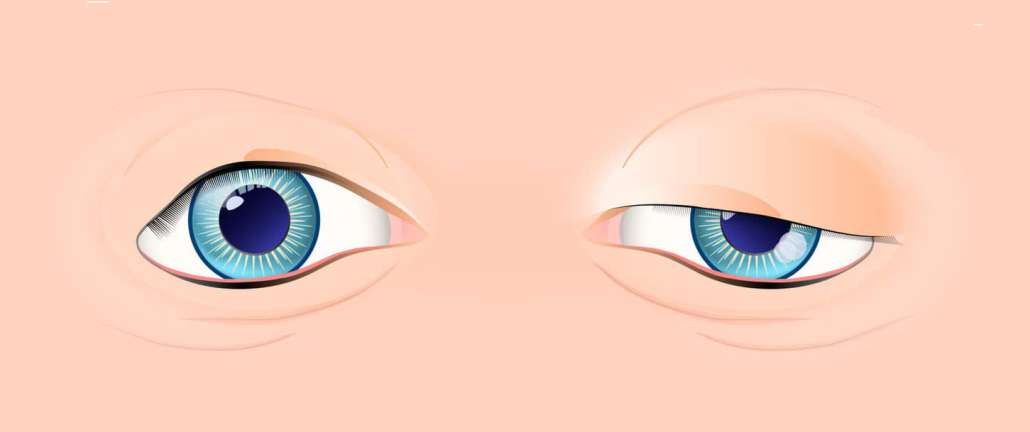
Ptosis is a drooping of the upper eyelid, caused by weakness or stretching of the muscle that lifts the lid (the levator muscle). It can affect one or both eyes, in children or adults, and becomes more common with age as this muscle naturally weakens and separates from the eyelid, a form known as involutional ptosis. Ptosis can also be present from birth (congenital ptosis), or develop later in life due to eye injury, nerve or muscle conditions, long-term contact lens wear, or as a side effect of previous eye surgery. The degree of drooping varies considerably between patients, the lid may sag only slightly, or it may cover the pupil entirely. In more significant cases, ptosis can restrict or even block normal vision, and in children, untreated ptosis can affect visual development.
Diagnosed through a clinical assessment of eyelid position and muscle function, including measuring how far the eyelid margin sits relative to the pupil and testing the strength of the levator muscle. Your surgeon will also consider whether the ptosis is congenital or acquired, and rule out any underlying nerve, muscle or other medical cause contributing to the droop.
Ptosis surgery effectively restores eyelid position and vision in the majority of cases. Most patients recover within one to two weeks, with swelling and bruising settling over this time. Occasionally, a second, minor procedure is needed to fine-tune the eyelid’s height or symmetry.